
Empowering the Lifelong Learner: Preparing Your University for the Digital Credential Wallet Era
Published on June 15, 2026
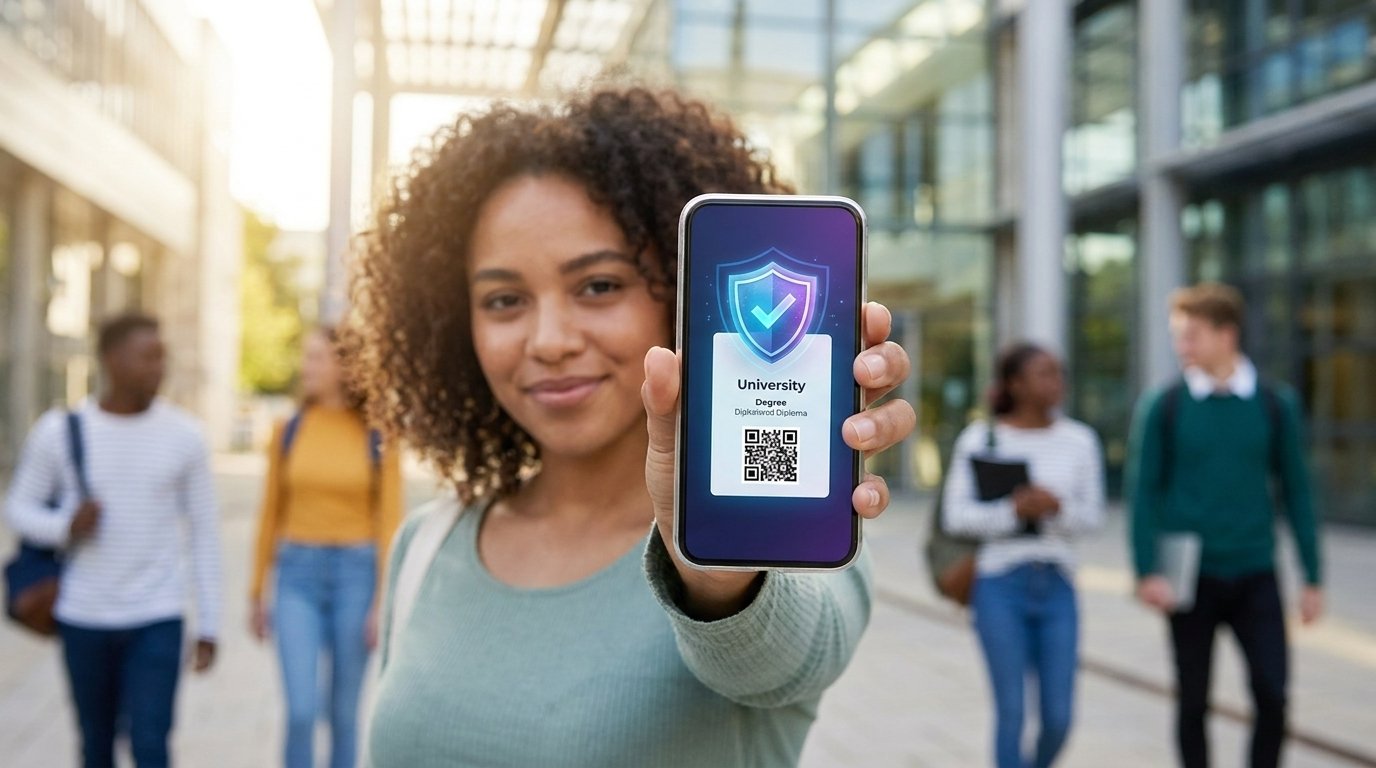
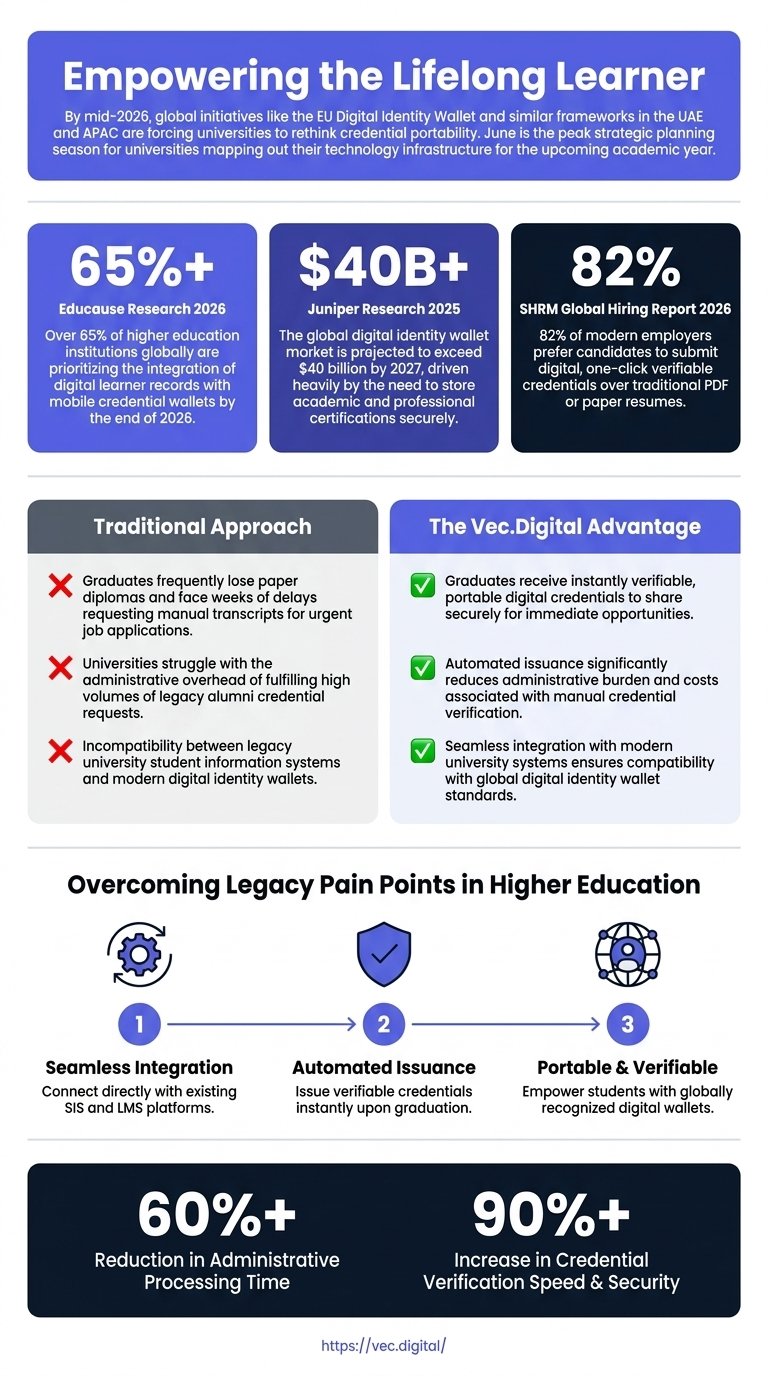
By the end of 2026, over 65% of higher education institutions globally are prioritizing the integration of digital learner records with mobile credential wallets, according to Educause Research (2026). For decades, academic institutions have relied on physical paper diplomas and manual transcript requests—a slow, environmentally taxing process that leaves graduates waiting weeks to prove their qualifications. Today, the landscape is shifting dramatically toward verifiable digital credentials, empowering students to carry their academic achievements right in their pockets. As global regulatory frameworks mandate secure, cross-border interoperability, universities must rapidly adapt their technological infrastructure to meet the demands of the modern, mobile-first learner.
In this comprehensive guide, our team at Vec.Digital explores the critical transition from legacy paper systems to modern digital identity ecosystems. Leveraging our extensive expertise in educational technology and cryptographic security, we will bridge the informational gap between traditional student information systems and the mobile digital wallets that students actually use. You will learn how to overcome administrative bottlenecks, navigate global data privacy laws, and implement automated issuance systems that deliver tamper-proof, globally recognized academic records.
Key Takeaways
- Verifiable digital credentials eliminate the risk of diploma fraud while giving students instant, global access to their academic achievements.
- The global digital credential wallet market is rapidly expanding, requiring universities to adopt interoperable issuance systems.
- Implementing blockchain certificate verification ensures that academic records remain tamper-proof and legally recognized across borders.
- Using a modern digital certificate maker allows institutions to automate high-volume issuance, drastically reducing administrative overhead.
- Dynamic QR code certificates provide employers with a seamless, one-click verification process that accelerates global hiring.
The Global Shift Toward Digital Credential Wallets
What is a Digital Credential Wallet?
A frequent question among academic administrators is: What is a digital credential wallet? Simply put, a digital credential wallet is a secure mobile application or software environment that allows individuals to store, manage, and share their digitized identity documents, academic transcripts, and professional certifications. Unlike a static PDF saved on a hard drive, the records within these wallets are cryptographically signed. This means that when a student shares their verifiable digital credentials with a prospective employer, the employer can instantly authenticate the issuer, the recipient, and the integrity of the document without needing to contact the university's registrar office.
The global momentum behind this technology is staggering. According to Juniper Research (2025), the global digital identity wallet market is projected to exceed $40 billion by 2027, driven heavily by the urgent need to store academic and professional certifications securely. This financial trajectory highlights a fundamental shift in how society views digital ownership and identity verification.
Global Frameworks and the European Digital Identity Wallet
To understand the urgency of this technological shift, we must look at international regulatory movements. People often ask: What is the European Digital Identity Wallet for higher education? Under the new eIDAS 2.0 regulations, the European Commission (2026) targets that more than 80% of EU citizens will have access to a digital ID wallet capable of securely holding educational credentials. This initiative aims to seamlessly connect cross-border educational and professional mobility.
However, this is not just a European phenomenon. Advanced digital identity frameworks in the UAE, Singapore, and Australia are making secure, cross-border interoperability for academic credentials a strict requirement. When a student graduates from a university in Dubai and applies for a job in Berlin, their digital diploma must be instantly recognizable and verifiable under these international standards. Consequently, utilizing advanced self-sovereign identity principles and blockchain anchoring has become globally critical for any modern educational institution.
Overcoming Legacy Pain Points in Higher Education
The Burden of Lost Diplomas and Administrative Overhead
For decades, universities have grappled with the severe limitations of physical documentation. Graduates frequently lose paper diplomas and face weeks of delays requesting manual transcripts for urgent job applications or postgraduate admissions. Furthermore, universities struggle with the massive administrative overhead of fulfilling high volumes of legacy alumni credential requests. Processing these requests requires dedicated staff, postal logistics, and significant financial resources.
By transitioning to a robust bulk certificate generator, academic registrars can completely eliminate these delays. When a student requires proof of graduation, they no longer need to submit a formal request and wait for a stamped envelope to cross the ocean. Instead, their academic achievements live securely in their mobile environment, accessible 24/7. This transition not only saves institutions millions in administrative costs but also vastly improves the alumni experience.
Navigating Cross-Border Data Privacy Regulations
Another profound pain point for IT Directors and Innovation Deans is navigating cross-border data privacy regulations, such as GDPR in Europe and FERPA in the United States, when students share academic records internationally. Legacy systems often rely on emailing unencrypted PDFs or sending physical documents through third-party clearinghouses, both of which pose significant data breach risks.
So, how does self-sovereign identity work for university transcripts? Self-sovereign identity (SSI) fundamentally shifts the control of data from the institution to the individual. Once the university issues the credential to the student's digital wallet, the university no longer acts as the middleman for every verification request. The student holds the cryptographic proof. When they apply for a job, they consent to share only the necessary data points with the employer. Because the verification happens via decentralized cryptographic checks rather than pinging a central university database, institutions drastically reduce their liability and inherently comply with strict global privacy mandates.
Bridging the Gap: Issuance Systems to Student Mobile Wallets
The Technical Architecture of Interoperability
A significant gap in current industry knowledge is understanding the technical bridge between legacy university student information systems (SIS) and the actual mobile digital wallets students use. It is not enough to simply use a basic digital certificate maker to design a visually appealing document; the underlying data must be structured in a machine-readable, cryptographically secure format.
Modern credentialing platforms utilize REST APIs to connect directly with a university's LMS (Learning Management System) or SIS. When a student completes their degree requirements, the university's system triggers an automated process. The platform ingests the student's data, applies the institution's digital signature, and anchors a unique cryptographic hash of the document to an immutable blockchain. This process transforms a standard data entry into a tamper-proof digital asset without requiring manual intervention from the IT department.
How Students Store and Access Their Credentials
Educators frequently ask: How do students store verifiable digital credentials on their phones? The process is designed to be frictionless. Once the automated issuance system generates the credential, the student receives a secure email or SMS containing a unique link. By clicking this link, the student is directed to a secure digital locker or a dedicated public verification page.
From this interface, students can choose to export their credential directly into compatible digital wallets (like Apple Wallet, Google Wallet, or specialized SSI wallets) using standard protocols like verifiable credentials (W3C VC). Additionally, the system generates dynamic QR code certificates. The student can save this QR code to their phone's photo gallery or wallet. Whenever someone needs to verify their degree, the student simply presents the QR code. The verifier scans it with any standard smartphone camera, which instantly routes them to the blockchain-backed verification page confirming the document's authenticity.
Employer Adoption and Legal Acceptance
Are Blockchain Degrees Legally Accepted?
As universities modernize, a common question from cautious administrators and students alike is: Are blockchain university degrees legally accepted by employers? The answer is a resounding yes, and the trend is accelerating rapidly. Because blockchain anchoring provides an immutable, mathematically provable record of authenticity, it offers a higher standard of proof than traditional watermarked paper or wet signatures.
Employers are actively driving this shift. According to the SHRM Global Hiring Report (2026), 82% of modern employers prefer candidates to submit digital, one-click verifiable credentials over traditional PDF or paper resumes. In a globalized hiring market, HR departments do not have the time to contact international universities to verify a candidate's background. Blockchain certificate verification removes the friction from the hiring process, allowing employers to trust the data implicitly and make faster, more confident hiring decisions.
The Power of Instant QR Verification
The true brilliance of modern credentialing lies in its accessibility. Employers do not need to download specialized software, register for an account, or understand the complex cryptography behind the blockchain to verify a document. The integration of QR code certificates serves as the universal translator between complex security and user-friendly experience.
When an employer scans the QR code on a candidate's digital diploma or resume, they are instantly taken to a dedicated authentication page. This page displays the issuing institution's details, the recipient's name, the date of issuance, signatory details, and a prominent "blockchain verified" badge. This instant, foolproof verification process protects employers from the rising threat of diploma fraud while significantly reducing their time-to-hire.
Maximizing Student Success and Engagement
Showcasing Achievements on Professional Networks
A credential is only as valuable as its visibility. Students actively want to know: How do I share a verifiable digital certificate on LinkedIn? Modern credentialing platforms are built with social sharing at their core. With a single click from their digital locker, students can push their verified diploma directly to the "Licenses & Certifications" section of their LinkedIn profile.
This integration ensures that the credential displayed on their profile includes a direct link back to the cryptographic verification page. When recruiters browse the student's profile, they see a verified badge rather than a self-reported claim. This visibility drastically enhances the graduate's employability and provides organic, highly visible brand marketing for the issuing university.
Boosting Retention Through Digital Recognition
The impact of verifiable credentials extends beyond graduation; it actively influences student behavior during their academic journey. According to HolonIQ Education Intelligence (2025), EdTech platforms offering portable, blockchain-backed credentials see a 35% higher student retention and course completion rate compared to those issuing static PDFs.
When students know they are working toward a globally recognized, technologically advanced credential that they will permanently own, their motivation increases. By breaking down larger degrees into stackable, verifiable micro-credentials along the way, universities can provide continuous positive reinforcement, adapting to the modern psychology of the lifelong learner.
Secure Your Institution's Future with Vec.Digital
The transition from legacy paper processes to a modern digital credential ecosystem is no longer optional; it is a global imperative. As international frameworks mandate digital identity interoperability and employers demand instant verification, universities must adopt robust, secure, and scalable issuance systems. By embracing verifiable digital credentials, your institution can eradicate diploma fraud, eliminate administrative bottlenecks, and empower your students to seamlessly prove their achievements on the global stage.
At Vec.Digital, we provide a comprehensive, all-in-one platform designed specifically to bridge the gap between your existing student information systems and the future of mobile digital wallets. From our intuitive drag-and-drop certificate maker to our automated API issuance and immutable blockchain anchoring, we deliver 99.98% uptime and uncompromising security without the need for complex internal development.
Ready to future-proof your university's credentialing infrastructure and empower the next generation of lifelong learners? Start issuing globally verifiable, tamper-proof credentials today.
Visit us online: https://vec.digital/ Contact our technical experts: support@vec.digital